Guided or self-guided: how to hike the Laugavegur
Independent, self-guided or with a guide? An honest comparison of the three ways to hike the Laugavegur Trail: cost, effort, flexibility and who each option suits.
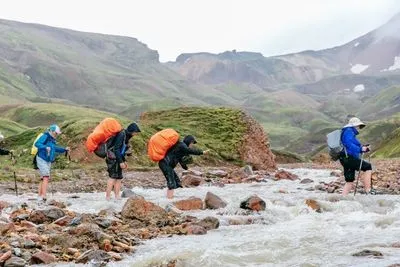
There are three ways to hike the Laugavegur. None is “the right one”: it depends on your experience, your budget and how much planning you want to do yourself.
1. Fully independent
You book the huts or campsites, the buses and everything else yourself, and you walk on your own.
Good for: experienced hikers who enjoy the planning, are flexible with dates and are comfortable navigating in fog.
Pros
- Cheapest option, especially if you camp.
- Full freedom: your pace, your stops.
Cons
- Hut bookings for July and August sell out fast, and you have to be ready the moment they’re released.
- Matching hut nights to bus times and flights is a puzzle.
- You’re responsible for decisions about weather and river crossings.
Rough budget (2026, per person, 4 nights in huts): 4 × 17,000 ISK for huts plus about 25,000–30,000 ISK for the buses, so roughly 95,000–100,000 ISK (± €650–700), food not included. Camping brings that down considerably.
2. Self-guided (organised, without a guide)
An operator arranges the bookings and logistics; you walk on your own with a route description and GPS track.
Good for: hikers who want to walk independently but don’t want to fight for hut beds or work out the bus timetables.
Pros
- Guaranteed accommodation on your dates, even when the huts look sold out.
- Transfers and the practical puzzle are taken care of.
- Still your own pace and your own company.
Cons
- More expensive than doing everything yourself.
- You still have to make your own decisions on the trail.
3. Guided group trek
You walk with a guide and a small group. The guide handles navigation, river crossings and decisions about the weather.
Good for: first-time trekkers in the highlands, solo travellers who want company, and anyone who’d like an expert to make the safety calls.
Pros
- Maximum peace of mind, especially early or late in the season.
- You learn about the geology, history and nature from someone who knows the area.
- Easy to join on your own.
Cons
- Fixed departure dates and a group pace.
- The most expensive option.
Which operator?
Many companies offer the Laugavegur, from small Icelandic guiding companies to international adventure operators. Compare on group size, what’s included (huts or tents, transfers, meals, luggage), and reviews from previous hikers.
One option for travellers from Belgium, the Netherlands, France and Germany is The Iceland Trail. It runs week-long trips that include the Laugavegur, with guided and self-guided departures and a hut-based variant. Past participants rate it 4.7 out of 5 on average. If you’d like everything taken care of but still want a real trekking experience, it’s worth a look.
Quick decision guide
| You are… | Best fit |
|---|---|
| Experienced, flexible, on a budget | Fully independent (camping) |
| Fit and independent, but with fixed dates | Self-guided |
| New to multi-day trekking or the highlands | Guided |
| Travelling solo and want company | Guided |
| Hiking early (late June) or late (September) | Guided, or independent with solid experience |
Whichever you choose, read our complete Laugavegur guide first. It helps you ask the right questions.